You Are (Not?) Special: Self-Esteem Curriculum
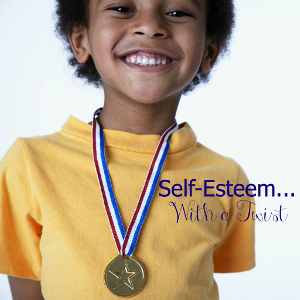 Past guest blogger Joann Wasik from TheGateway.org
Last spring, a high school teacher from Massachusetts fabricated international headlines when he told the graduating seniors that they were "not special." In his address, David McCullough, Jr. told the graduating class that despite their "pampered, cosseted, [and] bubble-wrapped" lives, "You are non special. You are not exceptional." Taken out of context, some excerpts of McCullough'south speech raised eyebrows.
Read or viewed in its entirety, McCullough'south speech resulted in huzzahs from a public who appreciated that – gasp! – someone finally dared to voice the idea that for every "exceptional" student, at that place are thousands of others who have the exact same credentials. McCullough's overall message, of form, was actually to remind students that practiced citizenship and success on a personal and professional level requires hard work, dedication, and a certain amount of personal sacrifice. His speech was very well-received by students and parents alike.
I mention this story because information technology underscores the sometimes uncomfortable dichotomy that some teachers face when handling the topic of self-esteem in the classroom. Many school wellness programs now include units on cocky-esteem and individual "specialness" at all form levels. The subject of nurturing self-esteem in students is fraught with challenges – what methods actually aid students, and which methods actually backfire? For example, does awarding trophies to every team member really heave individual cocky-esteem, or does it ship the bulletin to kids that they can look rewards regardless of their effort and operation? Do mass accolades cheapen the feel and negate the value of accomplishment, or do kids actually feel that they've earned recognition that they deserve?
There is no doubt that cocky-esteem is a vital component to student success, both in school and across. Lessons and activities to discuss and nurture cocky-esteem in students are certainly of import facets in a well-rounded schoolhouse wellness program, peculiarly during the tween and teen years when student self-paradigm typically plummets. Information technology can be hard, notwithstanding, to find educational activity materials that aren't overly invasive or touchy-feely, yet still engage students and prompt them to think about how to develop a salubrious self-paradigm. This calendar week I've highlighted iii resource on self-esteem from the Gateway's collection, and will exist featuring many more lessons, units, and activities throughout the calendar week on our Twitter and Facebook pages. Delight read my colleague Peggy's companion column (linked below) for additional resources and ideas on cocky-esteem lessons and activities.
The Myth of Self-Esteem
Subjects: Health, Language Arts
Course: 3-12
Should every kid on the team become a trophy only for showing up, regardless of endeavor or performance? Or, should kids actually accept to put along effort, or attain a goal or behavior, before parents and other adults offering praise? This guide examines how parents praise their children, and offers various ways to approach praise without building false cocky-esteem. It also contains tips for parents, as well as lesson plans for grades 3-5, 6-8, and nine-12. This guide was produced by Connect with Kids, a multimedia company focused on improving pupil behavior, staff development, and parent engagement.
Chalk Information technology Upward: Cocky-Esteem
Subjects: Health, Linguistic communication Arts
Course: 6-12
This series of exercises asks students to recall critically well-nigh and to explore the concept of self-esteem. The exercises utilize diverse scenarios, from the Iii Little Pigs to examinations of fashion, gender, and stereotyping, for students to examine in writing and through discussion. I like that this resource addresses the notion of cocky-esteem in a straightforward, not-touch-feely way. Past exploring self-esteem and self-worth through character-driven scenarios, students are less probable to feel "exposed" or put on the spot. This resource was produced by Talk It Up, part of the Australian Broadcasting Corporation. Talk It Up is a site for kids to acquire virtually health, strength, happiness and growing into adulthood.
Self-Esteem
Grades: 11
Self-concept is made upwardly of several things. People with a high self-concept and self-esteem seem to do well in the world. They are people who believe they can be successful. They are able to perform well at work, and they go forth well with others in all relationships. I like that this resources prompts students to consider their strengths and positive traits, and to retrieve about how they can continue to develop and emphasize these characteristics. This lesson is offered by the Utah Instruction Network (UEN) , role of a consortium of public education partners in Utah. UEN offers distance education resources, professional development opportunities, teaching materials, and more than.
Peggy'southward companion cavalcade:
Resources mentioned in this post:
rodriguezruitheroming51.blogspot.com
Source: https://www.weareteachers.com/you-are-not-special-self-esteem-curriculum/
0 Response to "You Are (Not?) Special: Self-Esteem Curriculum"
Post a Comment